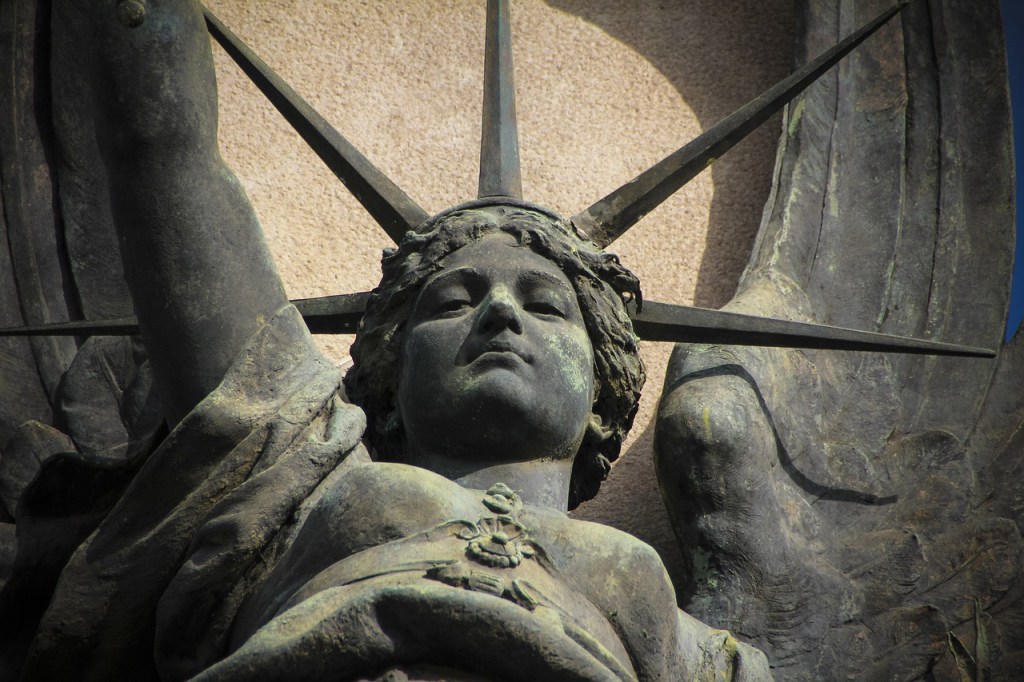
“Liberty cannot be preserved without general knowledge among the people.” – John Adams
It seems instinctive that humans yearn for freedom. The American Revolution is a classic example of this phenomenon. Each colony had its own government, but they were controlled by the Brittish King, King George III. Without the ability to be self-governed or create their own laws, they put everything on the line for something greater than themselves, freedom.
What is freedom?
The modern defention of freedom is the power or right to act, speak, or think as one wants without hinderance or restraint.
The defention of absolute freedom is associated with French philosopher Jean-Paul Sartre and states that people are not limited by external factors or pre-existing essence, and are free to create their own meaning and purpose in life.
At first glance, this sounds like what we as humans strive for, but in practice, this is not what we have. What people think they want and what they actually want turn out to be completely different ideas.
What true freedom really is is a state in which individuals have complete autonomy without external restrictions, rules, or limitations imposed by society, laws, or governments. Embodying the idea of unrestricted liberty where every person is free to do what they wish, regardless of consequences for others or the collective good.
There are a few big issues with absolute freedom. One of the major concerns is that an ungovernable group of humans would naturally result in chaos in mass numbers. This can already be observed in times of civil unrest. In large cities, when problems arise, protests tend to be much more violent and chaotic than in small towns. Though we do have some evidence of this working in small communities like Slab City, the overall overturn of law to lawlessness would be detrimental to human life in theory.
In a sense, absolute freedom is paradoxical. If absolute freedom is the ability to commit acts without consequence, you’d have the ability to take it away from others, whether by force or manipulation. How can true freedom exist in a space where the freedoms can be taken away by another’s unethical acts of freedom?
Civil Liberty
What it turns out people really want are civil liberties. Civil liberty are fundamental rights and freedoms that protect individuals from excessive government interference or coercive actions. Typically, these “freedoms” are preserved in constitutions, laws, or legal precedents. For a democratic society, it is vital for the countries’ continued success. Civil liberties or civil rights ensure individuals can express themselves, live free within the legal bindings of said constitution, and be a part of society without unjust restrictions or oppression.
The most distinct differences between absolute freedom and civil liberties are law and order. People want the ability to speak freely, practice religion, and make their own choices but also want protection from the government so that these liberties can not be taken away in a moments notice.
Civil liberty, like absolute freedom, also has its fair share of problems. Government overreach and societal pressures can and arguably will inevitably infringe upon fundamental individual rights. Attacks on free speech, religion, and many other unjust acts cast upon by large tyranical governments could situationally be worse off for freedom than its absolute form.
Balance
The power dynamic between democratic populations and their governments ebbs and flows when it comes to civil rights and government overreach. Revolutions reset the corruption, which in turn slowly creeps back into control again.
The dynamic of what’s just and unjust is also debated on between groups of people in the same population. This conflict also ebbs and flows as old ideas and belief systems fade out and become replaced with new younger ideas.
Conclusion
Although we like to fool ourselves into believing we know what’s best for humanity, freedom and civil liberty have no definitive solution. Otherwise, we would live in a harmonious world without conflict. Freedom and civil liberty exist in a yin and yang structure and are forever in coexistence with contest and conflict.
The most important principles to remember are having a belief system, debate on substance, keeping an open mind, and always being on the search for truth and understanding especially when it’s inconvenient for you to do so.


 Foundry of Reason
Leave a comment